

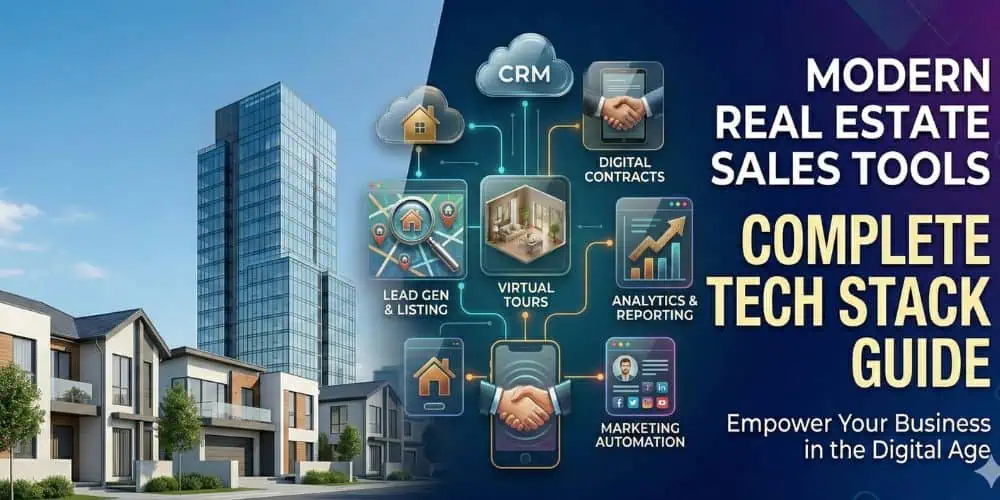
Real estate sales tools are the platforms agents and brokerages use to generate leads, manage client relationships, automate follow-up, market listings, coordinate transactions, and measure performance. A strong real estate sales system usually includes a CRM, IDX website, lead capture tools, email and SMS automation, calling tools, transaction management, reporting dashboards, and marketing platforms.
The goal is not to collect random software. The goal is to build one connected workflow where every lead, listing inquiry, showing request, campaign, and client conversation moves through the same organized system.
For agents who rely on property search as part of lead generation, a crm with idx integration can connect website activity, MLS-powered listings, lead capture, and automated follow-up in one more efficient process.
Why Real Estate Sales Tools Matter More Than Ever
Real estate has always been relationship-driven, but the way relationships begin and develop has changed.
Buyers search listings before speaking with an agent. Sellers compare local experts online before booking a consultation. Leads come from websites, ads, referrals, social media, property alerts, listing portals, open houses, and email campaigns.
Without the right system, that creates chaos.
An agent may have:
- website leads in one inbox,
- Facebook leads in another dashboard,
- saved searches in an IDX platform,
- notes inside a spreadsheet,
- follow-up reminders in a calendar,
- and transaction files stored somewhere else.
That setup works until lead volume increases.
Then missed calls, delayed follow-ups, duplicate data, and forgotten prospects become expensive problems.
Modern real estate sales tools solve this by creating structure. They help agents respond faster, track buyer intent, manage seller opportunities, automate routine communication, and keep every deal moving.
The best systems do not replace the agent. They remove the manual work that slows agents down.
What Is a Real Estate Sales System?
A real estate sales system is the connected process an agent or brokerage uses to move people from first contact to closed transaction.
It includes the tools, workflows, automations, and data structure behind daily operations.
A complete real estate sales system usually manages:
- lead capture,
- contact organization,
- pipeline tracking,
- property search behavior,
- email and SMS follow-up,
- appointment scheduling,
- task reminders,
- listing marketing,
- transaction coordination,
- and performance reporting.
The strongest systems are connected. When a lead submits a form, saves a property, clicks a listing alert, or requests a showing, that activity should flow into the CRM automatically.
That is the difference between using tools and running a system.
The Core Categories of Real Estate Sales Tools
Not every agent needs every platform. But every serious real estate business needs a clear structure around four areas:
- Lead generation
- Lead management
- Communication and follow-up
- Transaction and performance tracking
If one area is weak, the entire sales process suffers.
1. CRM and Lead Management Tools
The CRM is the center of a modern real estate tech stack.
It should do more than store names and phone numbers. A strong CRM helps agents understand who each lead is, where they came from, what they are interested in, and what should happen next.
A good CRM should support:
- contact profiles,
- lead source tracking,
- pipeline stages,
- task reminders,
- deal tracking,
- segmentation,
- email and SMS history,
- automated workflows,
- and team visibility.
This matters because real estate leads rarely convert immediately.
A buyer may browse listings for months before scheduling a showing. A seller may request a home valuation long before listing. Without a structured CRM, those long-cycle opportunities are easy to lose.
The right real estate CRM software helps agents centralize lead activity, follow-up history, and pipeline movement so conversations do not depend on memory, inbox searches, or scattered spreadsheets.
2. IDX Websites and Property Search Tools
A real estate website should not function like a static brochure.
Modern buyers expect to search properties, filter listings, save homes, view photos, and request information directly from an agent or brokerage website.
That is where IDX becomes important.
IDX connects a real estate website to approved MLS listing data, allowing visitors to search active properties through a public-facing interface.
A strong IDX website can support:
- live property search,
- map-based browsing,
- neighborhood pages,
- saved searches,
- listing alerts,
- showing requests,
- and lead capture forms.
The operational value comes from connecting this search behavior to the CRM.
For example, if a buyer repeatedly views townhomes in the same area, saves three listings, and returns twice in one week, that activity should inform follow-up. The agent should not receive only a basic form submission with no context.
For a deeper explanation of IDX fundamentals, read What Is an IDX Site?.
Ready to Put AI to Work in Your Real Estate Business?
NOVACRM brings your leads, marketing, and client communication into one platform, so nothing falls through the cracks.
Talk to Our Sales Team3. Lead Capture and Landing Page Tools
Traffic alone does not create business. Conversion does.
Lead capture tools help turn website visitors, ad clicks, and social traffic into identifiable prospects.
Useful lead capture assets include:
- home valuation pages,
- buyer guide downloads,
- seller consultation forms,
- neighborhood report pages,
- open house registration forms,
- property inquiry forms,
- and landing pages for paid campaigns.
The key is matching the offer to the intent.
A buyer browsing listings may respond to saved search alerts. A seller researching value may respond to a pricing consultation. A relocating buyer may respond to a neighborhood guide.
High-performing real estate landing pages usually have:
- one clear offer,
- short forms,
- mobile-friendly design,
- strong trust signals,
- and immediate follow-up automation.
A common mistake is sending all paid traffic to the homepage. A focused landing page almost always performs better because it removes distractions and aligns with the user’s reason for clicking.
4. Email and SMS Automation Tools
Follow-up is where many agents lose deals.
The first response matters, but long-term consistency matters just as much.
Email and SMS automation tools help agents stay in touch without manually writing every message.
A strong automation system can send:
- instant lead responses,
- new listing alerts,
- price change notifications,
- market updates,
- appointment reminders,
- seller nurture campaigns,
- buyer education sequences,
- and reactivation messages.
The best workflows are behavior-based.
If a buyer clicks multiple condo listings, the follow-up should reflect that interest. If a seller opens multiple pricing emails, the system should trigger a task for personal outreach.
Generic drip campaigns are better than no follow-up, but personalized automation performs better because it reflects actual client behavior.
5. Calling, Texting, and AI Communication Tools
Real estate still depends on conversations.
Automation can support communication, but voice and direct messaging remain critical for conversion.
Useful communication tools include:
- power dialers,
- call tracking,
- voicemail drop,
- SMS campaigns,
- call recording,
- appointment booking,
- chat widgets,
- and AI call assistants.
The main benefit is speed.
A lead who requests information from a property page may also contact two or three other agents. The team that responds first with useful context often wins the conversation.
AI and automation are especially useful for after-hours inquiries, missed calls, basic qualification, and appointment routing.
The goal is not to make communication feel robotic. The goal is to ensure every inquiry gets a timely response and every serious opportunity reaches the right person.
6. Marketing and Content Tools
Visibility is part of sales.
Agents need tools that help them create, distribute, and measure marketing across channels.
Important marketing tools include:
- social media schedulers,
- email campaign builders,
- ad platforms,
- graphic design tools,
- video editing tools,
- blog publishing systems,
- analytics dashboards,
- and review management tools.
The strongest marketing systems connect content with lead capture.
A market update should lead to a consultation form. A listing video should lead to a showing request. A neighborhood guide should lead to saved searches or buyer registration.
Marketing without tracking creates awareness, but marketing with CRM integration creates measurable pipeline.
7. Transaction Management Tools
Once a lead becomes a client, the workflow changes.
Transaction management tools help agents coordinate documents, deadlines, signatures, compliance, and communication during the deal process.
These platforms often support:
- document storage,
- e-signatures,
- task checklists,
- offer tracking,
- closing timelines,
- compliance review,
- and client updates.
This reduces administrative risk.
In busy teams, transaction tools also create accountability. Everyone knows what has been completed, what is pending, and who owns the next step.
A strong sales system does not stop at lead generation. It carries the client from first inquiry to closing and beyond.
How IDX, MLS, and CRM Fit Into the Sales Stack
Real estate technology becomes more powerful when core systems work together.
MLS provides listing data.
IDX displays approved listings on websites.
The CRM captures and manages the lead activity.
Automation keeps communication moving.
Reporting shows what is working.
That full workflow is what turns scattered tools into a real estate sales system.
To understand how MLS and IDX differ, read IDX vs MLS: Key Differences Between MLS and IDX.
For agents building a listing-driven website strategy, the quality of IDX implementation matters. Slow pages, weak mobile layouts, duplicate listing content, and poor internal linking can limit both SEO and conversion performance.
For technical setup guidance, read The Complete Guide to IDX Integration.
What to Look for in Real Estate Sales Tools
Before choosing any tool, evaluate how it fits into your operating system.
Ask these questions:
- Does it connect with my CRM?
- Does it reduce manual work?
- Does it improve lead response speed?
- Does it help track buyer or seller intent?
- Does it support mobile workflows?
- Does it improve reporting visibility?
- Does it integrate with website and IDX activity?
- Does it help my team collaborate better?
- Does it create a better client experience?
A tool that solves one problem but creates three new ones is not a good investment.
The best platforms reduce friction across the full workflow.
Common Mistakes Agents Make With Tech Tools
Mistake 1: Buying Tools Without a Workflow
Many agents buy software because it looks useful, not because it fits a defined process.
Start with the workflow first. Then choose tools that support it.
Mistake 2: Using Too Many Disconnected Platforms
Disconnected tools create duplicate data, missed follow-ups, and reporting gaps.
If a lead enters one system but follow-up happens somewhere else, visibility suffers.
Mistake 3: Ignoring Mobile Experience
Agents work from phones. Buyers search from phones. Sellers respond from phones.
If your tools are not mobile-friendly, adoption and conversion both decline.
For more on mobile property search, read The Future of Property Search: Why Your Clients Need a Mobile-First IDX Experience.
Mistake 4: Treating Automation as a Replacement for Relationships
Automation should support timely communication, not remove personal service.
The best agents automate routine tasks and personalize high-value conversations.
Mistake 5: Not Measuring Results
A real estate sales system should show:
- where leads come from,
- which campaigns convert,
- how fast agents respond,
- where deals stall,
- and which follow-up sequences produce appointments.
Without reporting, decisions become guesswork.
Final Thoughts
Modern real estate sales tools are no longer optional for agents and teams that want consistent growth.
The market moves too quickly for disconnected spreadsheets, manual follow-up, and scattered lead sources.
A strong real estate sales system connects the entire workflow:
- lead generation,
- IDX search,
- MLS-backed listing data,
- CRM management,
- automation,
- communication,
- marketing,
- transaction coordination,
- and reporting.
The best technology stack is not the one with the most tools. It is the one where every tool supports a clear business process.
When your website, CRM, IDX, communication tools, and marketing systems work together, you gain more than efficiency. You gain visibility, consistency, and control over the entire client journey.
That is what separates a collection of apps from a true real estate sales system.