



A mobile-first IDX experience is a real estate website or property search platform designed primarily for smartphone users while integrating live MLS listings through IDX technology. It improves search usability, lead generation, local SEO visibility, and buyer engagement by delivering fast property discovery, intuitive navigation, map-based search, and seamless inquiry workflows across mobile devices.
For modern real estate professionals, mobile-first IDX infrastructure is no longer optional. It directly impacts rankings, user engagement, lead conversion, and long-term online visibility.
Property Search Has Moved to Mobile
The way buyers search for homes has fundamentally changed.
Most property discovery now starts on a smartphone. Buyers browse listings during commutes, compare neighborhoods while visiting communities, save homes during evenings, and revisit searches multiple times before contacting an agent.
This shift has changed the expectations buyers have from real estate websites.
They now expect:
- instant loading times,
- smooth map interactions,
- intuitive filtering,
- saved searches,
- property alerts,
- and seamless mobile browsing.
If a real estate website struggles on mobile, buyers leave quickly. In competitive markets, that usually means they continue their search on large listing portals instead of staying within your ecosystem.
That is one of the main reasons many brokerages and agents now invest in real estate website builder with IDX solutions designed specifically around mobile search behavior and modern lead generation workflows.
A mobile-first IDX strategy is no longer simply a design preference. It directly affects:
- SEO rankings,
- user retention,
- lead capture,
- and conversion performance.
What Is a Mobile-First IDX Experience?
A mobile-first IDX experience is an IDX-powered real estate website optimized primarily for smartphone users instead of desktop visitors.
Traditional IDX websites were originally designed around desktop browsing patterns. Many older systems still rely on:
- slow plugins,
- oversized search interfaces,
- heavy JavaScript rendering,
- cluttered layouts,
- and poor mobile navigation.
Modern buyers interact differently.
They expect:
- thumb-friendly navigation,
- fast property loading,
- responsive search filters,
- location-aware map search,
- and frictionless inquiry forms.
A true mobile-first IDX platform prioritizes these behaviors from the beginning rather than adapting desktop layouts afterward.
Why Mobile-First IDX Matters for SEO
Google now evaluates websites primarily through mobile-first indexing.
That means the mobile version of your IDX website directly influences:
- crawlability,
- indexing,
- search visibility,
- and rankings.
This creates a major issue for outdated IDX implementations.
Many legacy IDX plugins generate:
- crawl inefficiencies,
- duplicate property pages,
- bloated JavaScript rendering,
- and poor Core Web Vitals performance.
In large MLS environments with thousands of listing pages, these problems compound quickly.
We often see poorly optimized IDX websites struggle with:
- weak indexation,
- low crawl efficiency,
- slow page speed,
- and unstable mobile UX.
As a result, many listing pages never fully rank despite containing valuable local search intent.
The strongest IDX property search systems typically use:
- clean crawlable URLs,
- responsive mobile architecture,
- schema markup,
- localized internal linking,
- and lightweight page rendering.
This improves both:
- search engine visibility,
- and buyer engagement.
For a deeper understanding of how IDX systems function operationally, read: What Is an IDX Site?
How Mobile Search Behavior Has Changed Buyer Journeys
Modern buyers rarely search properties in a linear way.
Instead, the process looks more like this:
- Initial mobile property discovery
- Saved listings and neighborhood comparisons
- Repeat mobile visits
- Market monitoring through alerts
- Shortlisting properties
- Agent contact
- Showing requests
This creates multiple engagement opportunities before a lead formally converts.
A properly optimized mobile IDX experience helps capture those interactions earlier in the buyer journey.
That matters because most buyers are not ready to inquire immediately.
They want to:
- browse inventory,
- compare pricing,
- explore neighborhoods,
- monitor market changes,
- and revisit listings repeatedly.
The real goal of mobile IDX is not just showing listings.
It is creating long-term engagement loops that keep buyers inside your ecosystem instead of losing them to third-party portals.
Key Features Every Mobile-First IDX Website Needs
1. Fast Search Performance
Speed directly affects both rankings and conversion rates.
Even small loading delays can increase abandonment significantly on mobile devices.
High-performing IDX search systems prioritize:
- compressed media,
- lightweight scripts,
- responsive filtering,
- and optimized caching.
This becomes especially important for image-heavy property pages.
2. Mobile Map Search
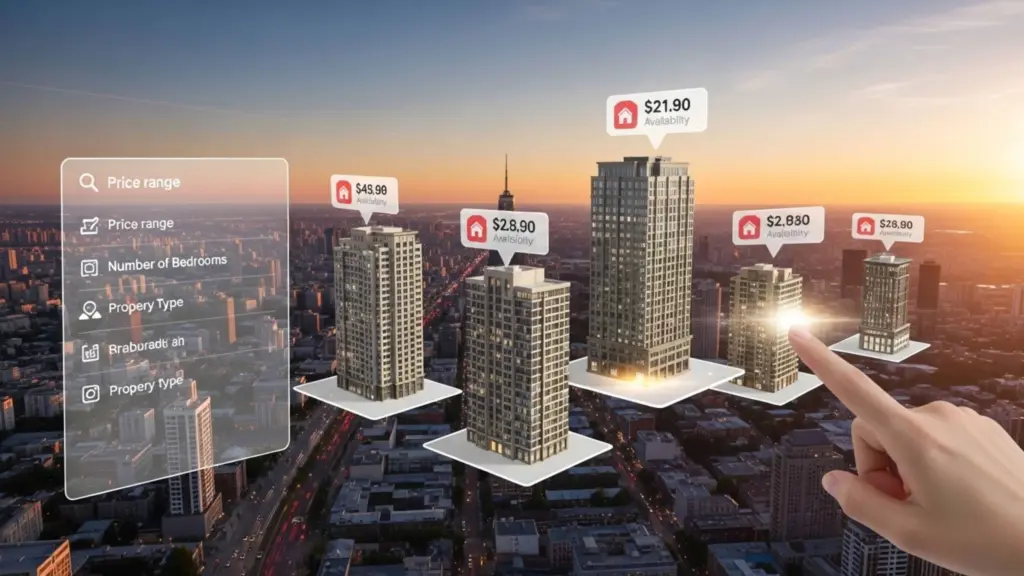
Map-based property exploration has become one of the most important mobile real estate search features.
Buyers want to visually understand:
- commute proximity,
- school access,
- walkability,
- nearby amenities,
- and neighborhood positioning.
A poor mobile map experience creates immediate friction.
3. Intelligent Saved Searches
Saved searches create repeat engagement.
The strongest systems allow buyers to:
- save neighborhoods,
- track price changes,
- monitor inventory,
- and receive personalized alerts.
This creates valuable behavioral data for lead nurturing workflows.
4. Simplified Lead Capture
Most mobile visitors will not complete long forms.
High-converting mobile IDX systems reduce friction by:
- simplifying inquiry forms,
- minimizing typing,
- enabling one-click scheduling,
- and supporting progressive registration.
Aggressive forced registration often hurts engagement and increases bounce rates.
5. Mobile-Optimized Property Pages
A strong property page should immediately surface:
- price,
- location,
- media,
- key features,
- and inquiry options.
Critical information should never be buried beneath oversized menus or excessive scrolling.
IDX Property Search and Local SEO
Local SEO plays a major role in mobile property discovery.
Buyers frequently search:
- homes near downtown,
- condos near transit,
- family homes in specific neighborhoods,
- or properties close to schools and amenities.
That creates strong opportunities for localized IDX content architecture.
The best-performing real estate websites combine:
- neighborhood landing pages,
- map-based search,
- local content hubs,
- optimized listing pages,
- and structured internal linking.
This improves topical authority while helping search engines understand geographic relevance.
Many real estate websites fail here because their IDX pages exist in isolation without broader local SEO strategy.
As a result:
- listings compete against each other,
- crawl depth weakens,
- and rankings stagnate.
Well-structured internal linking helps distribute authority across:
- city pages,
- neighborhood pages,
- property categories,
- and high-intent listing searches.
For additional context on IDX implementation strategy, read: The Complete Guide to IDX Integration
Why Real Estate Apps and IDX Experiences Are Converging
The line between IDX websites and real estate apps is becoming increasingly blurred.
Buyers now expect app-like experiences directly inside mobile browsers.
That includes:
- instant search responsiveness,
- swipe-friendly media galleries,
- push-style alerts,
- map interactions,
- and personalized recommendations.
Modern real estate app features increasingly overlap with advanced IDX functionality.
The most effective systems combine:
- IDX search,
- CRM tracking,
- automation,
- behavioral analytics,
- and lead nurturing
inside one connected workflow.
This allows agents and teams to understand:
- which listings buyers revisit,
- how often they return,
- what price ranges they prefer,
- and where intent levels increase.
Those insights become extremely valuable for conversion optimization.
CRM Integration Is What Turns Mobile Traffic Into Revenue
Generating mobile traffic is only part of the equation.
The real operational advantage comes from connecting IDX behavior directly into CRM workflows.
Without integration, many agents lose leads because:
- inquiries go unanswered,
- follow-up becomes inconsistent,
- or buyer activity remains invisible.
Integrated systems help automate:
- listing alerts,
- lead routing,
- email campaigns,
- follow-up reminders,
- and behavioral segmentation.
For example, if a buyer repeatedly searches luxury condos in the same neighborhood over several weeks, the CRM can trigger targeted outreach automatically.
This creates far more intelligent lead nurturing.
At NOVACRM, many teams use connected IDX and CRM workflows to centralize mobile lead engagement, automate follow-up, and improve operational visibility across the entire buyer journey.
If you want to understand how these systems fit into broader real estate operations, read:
Modern Real Estate Sales Tools: Complete Tech Stack Guide
Common Mobile IDX Mistakes That Hurt Conversion
1. Slow Plugin-Based IDX Systems
Heavy plugins often reduce:
- mobile performance,
- crawl efficiency,
- and user engagement.
This is one of the most common technical SEO issues we see on older IDX websites.
2. Poor Internal Linking
Many IDX implementations fail to connect:
- neighborhood pages,
- city pages,
- listing categories,
- and supporting content.
This weakens topical authority and search visibility.
3. Desktop-First Design
If mobile navigation feels secondary, buyers leave quickly.
Modern property search behavior is overwhelmingly mobile-driven.
4. Overly Aggressive Registration Walls
Forcing account creation too early often reduces engagement and discourages browsing behavior.
Progressive registration models usually perform better long term.
IDX vs MLS: Why the Difference Matters
Many buyers and even newer agents confuse IDX and MLS systems.
The MLS is the database where listing information is stored.
IDX is the technology framework that allows listings to display publicly on approved websites.
Understanding that distinction matters when evaluating:
- search infrastructure,
- data syndication,
- SEO architecture,
- and CRM integration.
For a more detailed explanation, read: IDX vs MLS: Key Differences Between MLS and IDX
Final Thoughts
Mobile-first IDX experiences are shaping the future of property search.
Buyers now expect:
- fast mobile browsing,
- intuitive map search,
- responsive filtering,
- personalized alerts,
- and seamless inquiry experiences across devices.
Real estate professionals who continue relying on outdated desktop-first IDX systems risk losing:
- search visibility,
- lead ownership,
- engagement opportunities,
- and long-term SEO growth.
The strongest IDX strategies now combine:
- mobile-first UX,
- localized SEO architecture,
- CRM integration,
- behavioral tracking,
- and automated lead nurturing
into one connected ecosystem designed around how buyers actually search today.
As mobile search behavior continues evolving, the gap between high-performing IDX systems and outdated implementations will only grow wider.