


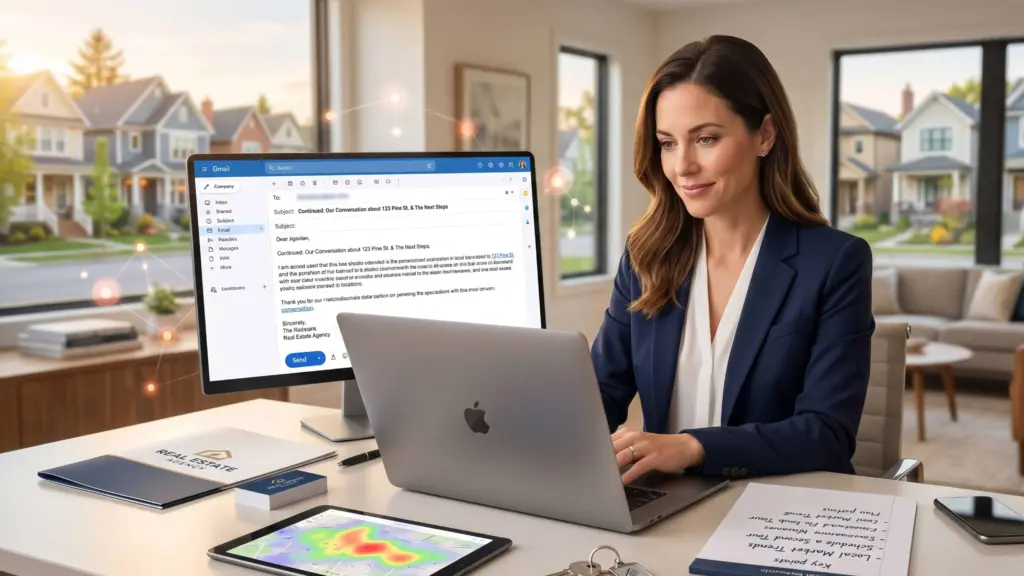
Most real estate deals don’t fall apart during the meeting. They fade away in the silence that follows.
You had a great conversation. The client seemed interested. You shook hands, exchanged pleasantries, and left feeling optimistic. Then… nothing. Days turn into weeks, and suddenly that warm lead has gone cold. The truth? Your meeting was just the opening act. What happens next is where deals are actually won or lost.
Too many agents treat follow-ups as an afterthought. They send generic “just checking in” emails or wait too long to reach out.
Meanwhile, their competitors are already in the client’s inbox with value, clarity, and momentum. A strong follow-up email after a meeting in real estate isn’t about being pushy; it’s about being professional, memorable, and helpful. This blog will walk you through proven strategies that turn post-meeting silence into signed contracts.
Why Follow-Ups Matter More Than the Meeting Itself
The meeting is where you plant the seed. The follow-up is where it grows.
Your client isn’t ready to decide during your conversation. They’re processing information. They’re weighing options. And they’re probably talking to two or three other agents. The person who stays top-of-mind wins. That’s not the agent with the flashiest pitch. It’s the one who followed up.
A real estate sales meeting follow-up does more than remind clients you exist. It builds trust. When you send a thoughtful email, you prove you listened. You show you’re organized. You demonstrate you actually care about their goals. Clients remember how you made them feel after the handshake, not just during it.
The gap between top agents and everyone else? Follow-up speed.
Top performers send their follow-up within 24 hours. Average agents wait three days. Some forget entirely. 80% of sales need five follow-ups after the first meeting. Yet 44% of salespeople give up after one attempt. That gap is where top earners separate themselves.
Consistency wins deals. Each follow-up reinforces your expertise. It keeps you in the conversation while others fade away. The client who seemed “just browsing” last week becomes your next closing. Why? Because you didn’t disappear.
Your follow-up isn’t interrupting their decision. It’s guiding it.
Common Mistakes Agents Make in Follow-Up Emails
You know follow-ups matter. You send them. But are they actually working?
Most agents sabotage their own deals without realizing it. They hit send on emails that feel robotic, arrive too late, or miss the mark entirely. These aren’t small missteps. They’re deal-killers disguised as harmless mistakes. The worst part? Your clients can tell when you’re phoning it in.
Here’s what’s quietly costing you conversions:
- Generic, copy-paste templates – Clients spot these instantly. If your email could be sent to anyone, it connects with no one.
- Waiting too long to respond – You had momentum after the meeting. Waiting 48+ hours kills it. Strike while you’re still fresh in their mind.
- Being too pushy or salesy – A thank-you email after a meeting shouldn’t sound like a hard close. Don’t put pressure on people; focus on value.
- No clear next step – “Let me know if you have questions” isn’t a call to action; it’s not clear what to do next. Tell them exactly what will happen next.
- Zero personalization – Did you mention their kids? Their timeline? Their specific concerns? If not, you weren’t listening.
- Information overload – Dumping 10 attachments and 500 words overwhelms. Keep it focused and digestible.
These mistakes don’t just make you forgettable. They make you look careless. And in real estate, carelessness doesn’t close deals.
Your follow-up is a second first impression. It’s your chance to prove you’re different from the three other agents they met this week. Get it right, and you’re the obvious choice. Get it wrong, and you’re just another name in their inbox they’ll eventually delete.
Key Elements of a High-Converting Follow-Up Email
A great follow-up email doesn’t happen by accident. It’s built on specific elements that work together.
Your email needs to feel personal. It needs to add value. And it needs to move the deal forward. Here’s how to build one that actually converts.
Start with personalization and context
Use their name. Reference something specific from your conversation. Their timeline or concerns. Their excitement about a particular neighborhood. This separates you from every generic email in their inbox.
Tie back to the meeting. Talk about something you talked about. Maybe they loved the open floor plan. Or they had questions about school districts. This shows you were listening.
Deliver a clear value recap. What did you promise to send? Market reports? Comparable listings? Property recommendations? Follow through immediately. This is where you prove reliability. Don’t just say “as discussed.” Actually, attach or link what you promised. If you’re using automation to stay consistent, strategies like email marketing for real estate can help you scale without losing the personal touch.
The three non-negotiables
Every high-converting follow-up needs clarity, relevance, and timing. Here’s what that looks like:
- Clarity – Your email should be scannable in under 60 seconds. No walls of text. No jargon.
- Relevance – Every sentence should relate directly to their needs. Cut the filler.
- Timing – Send it within 24 hours while the meeting is still fresh in their mind.
End with a strong call to action. Don’t leave them guessing what happens next. “Are you available Tuesday at 2 PM for a property tour?” works. “Let me know your thoughts” doesn’t. Give them a specific next step.
Keep your tone professional but warm. You’re not their buddy. But you’re also not a robot. Write like you’re helping a friend make a smart decision. That balance of expertise and approachability makes clients want to work with you.
Best Timing Strategies for Sending Follow-Up Emails
Timing isn’t everything. But it’s close.
Send your first follow-up too late, and you lose momentum. Send it too early, and you might seem desperate. The sweet spot? Within 24 hours of your meeting. This is when you’re still top of mind. The conversation is fresh. They remember your face, your advice, and the properties you discussed.
Same-day follow-ups work even better for hot leads. If someone showed serious interest or asked detailed questions, strike while the iron is hot. Send a quick email within 2-3 hours. Thank them for their time. Attach what you promised. Confirm the next step. Speed signals professionalism and enthusiasm without crossing into pushy territory.
But one follow-up after a real estate sales meeting isn’t enough. Most clients need to talk to you a few times before they’re ready to move on.
This is a good rhythm: send the first email within 24 hours, the second check-in after 3–4 days, and the third follow-up after a week. Give them enough space so they don’t bother you, but keep them consistent so they stay visible.
What about frequency? Three to five follow-ups over two weeks is the industry standard. Each one should add value. Share a new listing. Send a market update. Answer a question they had. Never send a “just checking in” email. Those get ignored.
Consistency matters more than perfection. Top agents schedule follow-ups immediately after meetings. They don’t rely on memory or motivation. They build a system. Whether you use a CRM, calendar reminders, or simple templates, the key is removing friction. Make it automatic so it actually happens.
The deal doesn’t go to the most talented agent. It goes to the one who stays in touch.
Top Strategies to Craft a Follow-Up Email After Meeting in Real Estate
You’ve nailed the meeting. Now it’s time to nail the follow-up. The difference between a good follow-up and a great one comes down to strategy. Generic emails get deleted. Strategic ones get responses.
Here’s how to craft follow-ups that actually convert.
Go beyond basic personalization
Using their name is the bare minimum. Real personalization digs deeper. Reference the exact property they loved. Mention their concern about the commute time. Bring up their daughter starting school next fall. These details prove you were fully present during the conversation, not just going through the motions.
Value-driven messaging separates top agents from the rest. Don’t just say “following up.” Deliver something useful. A neighborhood crime report. Updated school ratings. A comparison of mortgage rates. Your follow-up email after a meeting in real estate should make them smarter about their decision, not just remind them you exist.
Tell stories, not sales pitches
Facts inform. Stories persuade. Instead of listing property features, paint a picture. “The backyard gets amazing afternoon sun, perfect for those weekend barbecues you mentioned.” Help them see their life in that space. Make it real and tangible.
Address objections before they become deal-breakers. If they seemed hesitant about the price, include comps that justify the value. If location was a concern, share walkability scores or upcoming development plans. Proactive problem-solving builds trust faster than waiting for them to bring it up again.
Keep it short and actionable. Respect their time. Three to four paragraphs maximum. Every sentence should earn its place. If you’re managing multiple clients and want to maintain this level of personalization at scale, real estate marketing automation can help you stay consistent without burning out.
Proven tactics that get responses:
- Reference specific properties – “The Maple Street listing you asked about just had a price adjustment.”
- Include helpful resources – Market reports, mortgage calculators, moving checklists. Make yourself useful.
- Add social proof – “I helped the Johnsons find a similar home in that area last month.”
- Suggest clear next steps – “Can we schedule a showing for Thursday at 4 PM?”
- Keep your tone conversational – Write like you’re texting a friend, not drafting a legal document.
The best follow-ups don’t feel like follow-ups. They feel like the natural next step in an ongoing conversation. Your job isn’t to chase clients. It’s to guide them toward a decision they already want to make.
Types of Follow-Up Emails Every Real Estate Agent Should Use
Not all follow-ups are created equal. Different situations call for different approaches.
The key is knowing which type to send and when. Use the wrong one, and you waste an opportunity.
Use the right one, and you move the deal forward.
Four essential email types every agent needs
Your follow-up strategy should include multiple email types. Each one serves a specific purpose in the client journey.
Some emails build trust. Others push for action. Some rescue cold leads. The best agents know exactly which email to send based on where the client is in the decision process.
Use this 3-5 days later when you’ve scheduled a next action. Confirm the date, time, and location. Add helpful details like parking instructions or what documents to bring. Keep it brief and logistics-focused.
- Immediate thank-you: Send this within 2-4 hours of your meeting. Express genuine appreciation. Recap one key point from your conversation. Attach any promised resources. A strong thank you email after the appointment shows you’re organized and sets a professional tone for everything that follows.
- Reminder follow-up: Use this again in 3 to 5 days when you’ve set a date for your next action. Check the time, date, and place again. Include useful information like how to park or what documents to bring. Keep it short and focused on logistics.
- Value-added follow-up: This is your secret weapon when there’s no immediate next step. Share a new listing that matches their criteria. Forward a relevant market article. Offer a helpful resource. This email proves you’re thinking about their needs between meetings, not just your commission check.
- Re-engagement email: Deploy this after 2-3 weeks of silence. Reference your last conversation. Acknowledge the time gap without guilt-tripping. Offer something fresh and compelling. Maybe a price drop on a property they liked. Or a new neighborhood that fits their budget. Give them a low-pressure reason to respond.
Different types of emails drive the relationship along in different ways. The quick thank-you keeps things going. The reminder stops people from misunderstanding each other.
Master all four types, and you create a follow-up system that never lets deals slip away. Most agents rely on one or two. Top performers use the full toolkit strategically.
Real Estate Presentation Follow-Up Templates You Can Use
Templates get a bad reputation. People think they’re impersonal or lazy. But here’s the truth: templates save you time without sacrificing quality.
The key is customization. A good template gives you structure. You fill in the personal details. You adjust the tone. It is easy to make it feel human. This lets you respond fast while still being thoughtful.
Smart agents use templates as starting points, not final drafts. They handle the heavy lifting so you can focus on what matters: building relationships and closing deals. If you’re managing dozens of clients, tools that automate your real estate business can help you scale these personal touches without the manual work.
Ready-to-use real estate presentation follow-up templates
Template 1: After Property Showing
Subject: Thoughts on [Property Address]?
Hi [Name],
Thanks for taking the time to view [Property Address] today. I could tell you were interested in [specific feature they mentioned].
I’ve attached the listing details and comparable sales in the area. Based on what you shared about [their priority], I think this property checks a lot of boxes.
Are you available for a quick call on Thursday to discuss next steps? I’d love to hear your thoughts.
Best,
[Your Name]
Template 2: After Consultation
Subject: Your [Neighborhood] Home Search – Next Steps
Hey [Name],
It was nice to meet with you today and hear about your plans for [buying/selling]. Thank you for telling me about [specific detail they mentioned].
Here’s [resource you said you’d send] like I said I would. I’ve also added [another useful item, like a market report or checklist].
I’ll get back to you early next week with some properties that fit what you’re looking for. Please don’t hesitate to get in touch if you have any questions in the meantime.
Talk soon,
[Your Name]
Template 3: Re-Engagement
Subject: Still thinking about [Neighborhood/Goal]?
Hi [Name],
We haven’t talked in a few weeks. I wanted to get in touch because [specific reason: new listing, market change, price drop].
I know that timing is very important in real estate. I’d love to help you if you’re still looking for options in [area]. There’s no rush; I just want to make sure you have all the information you need.
Let me know if you’d like to chat.
Best,
[Your Name]
These real estate presentation follow-up templates work because they’re flexible. Swap in your details. Adjust the tone to match your style. Send them quickly while the conversation is fresh. That’s how you turn templates into conversions.
Make Follow-Up Your Unfair Advantage
You now have the strategies, the timing frameworks, and the templates. What separates agents who use this information from those who just read it? Execution.
Most agents won’t do this work. They’ll read this blog, nod along, and go right back to their old habits. That’s your opportunity. When you commit to a structured follow-up process, you automatically outperform 80% of your competition.
A strong follow-up email in real estate doesn’t require more hours in your day. It requires better systems. Tools like our NOVACRM help you track every conversation and schedule follow-ups automatically. This real estate CRM can help you personalize at scale without the manual grunt work. You focus on relationships. The software handles the rest.
Start with one change today. Pick a template and set a 24-hour follow-up reminder. Send one value-driven email this week. Small actions compound into closed deals. Your follow-up game isn’t just about staying in touch. It’s about being the agent clients can’t ignore.
For more information about NOVACRM and how it works, reach out to our team today.