


Your buyers aren’t waiting to get home to search for properties.
They’re scrolling during their lunch break. Checking new listings on the couch at 10 PM. Saving favorites while stuck in traffic. The property search happens everywhere now and it happens on mobile.
This shift changes everything.
Today’s buyers have been trained by Amazon to expect instant results. Uber taught them that convenience is non-negotiable. Airbnb showed them that browsing a property should feel exciting, not frustrating. These experiences set the bar, and now that same bar applies to real estate.
So, when a buyer lands on a slow, clunky, desktop-designed website on their phone? They leave. Fast.
Traditional real estate websites weren’t built for this world. Small buttons, slow load times and hard-to-read listings. They quietly push buyers toward platforms that just work better.
This is exactly where IDX property search technology has stepped in and evolved. Modern IDX isn’t just a listing feed anymore. It’s the engine behind a seamless, fast, personalized search experience built specifically for how buyers actually browse today.
The question for agents and brokers isn’t whether mobile matters. It’s whether your current setup is keeping up or quietly costing you clients.
The Evolution of Property Search: From Desktop Listings to Mobile
Not long ago, searching for a home meant calling an agent, waiting for printed listings, or sitting at a desktop computer to browse a basic MLS portal. Access was limited. The experience was slow. And buyers had no choice but to accept it.
Then IDX changed the game.
Agents and brokers could finally display live listings directly on their own websites. It felt revolutionary at the time. But the designs were built for large screens, fast Wi-Fi, and patient users. Clunky navigation. Tiny filter options. Pages that took forever to load. The technology was powerful but the experience lagged behind.
Then came the portals.
Zillow, Realtor.com, and Trulia swooped in and did what most agent websites couldn’t. They made property search simple, fast, and visually clean. Buyers flocked to them. And for a while, it felt like independent agent websites couldn’t compete.
But something bigger was already happening underneath all of this.
Mobile real estate search was quietly becoming the default. Buyers stopped sitting at desks to browse homes. They started searching in stolen moments throughout the day:
- Checking new listings before getting out of bed
- Saving properties during a lunch break
- Sharing favorites with their partner from the couch at night
- Revisiting a listing three times before finally calling an agent
This wasn’t a trend. It was a permanent behavioral shift.
Today’s buyers don’t separate “browsing on the phone” from “seriously searching.” To them, it’s the same thing. Their expectations have been reset and they won’t lower them for a website that feels five years behind.
The agents who recognized this early started winning more clients. The ones who didn’t are still wondering where their leads went.
What Modern Homebuyers Expect from Property Search Today
Today’s homebuyers don’t lower their standards for real estate websites. They’ve used apps that load in seconds and platforms that remember their preferences. Real-time updates are now just expected. When a website falls short, they don’t complain. They just leave and find one that delivers. Here’s exactly what they’re looking for today.
Speed and Convenience
Buyers make snap judgments. A page that takes more than a few seconds to load loses them instantly. Confusing navigation on a small screen makes them give up. Having to pinch and zoom just to read a listing? That’s the final straw.
Speed isn’t a bonus feature anymore. It’s the bare minimum. Easy navigation and full mobile responsiveness aren’t optional upgrades either. Get these wrong and nothing else on your website matters.
Personalized Experiences
Buyers don’t want to start from scratch every time they visit a site. Saved searches, instant alerts, and smart recommendations keep them engaged and coming back.
This is where a well-built IDX real estate website pulls serious weight. When buyers can save searches, set notifications, and receive relevant property suggestions, repeat engagement builds naturally. That habit builds trust. And trust converts browsers into clients.
Generic experiences push buyers toward the big portals. Personalized ones make them stay on yours.
Transparency and Real-Time Data
Nothing frustrates a buyer faster than falling in love with a listing, only to find out it sold two weeks ago.
Buyers expect accuracy. Listings should reflect what’s actually available right now. Price changes, status updates, and new photos need to appear immediately, not after a 24-hour delay.
Full property details matter just as much. School districts, lot size, days on market, neighborhood insights, buyers want the complete picture before picking up the phone.
Give them that level of transparency and they’ll trust you before the first conversation even starts.
IDX Property Search: The Technology Powering Modern Real Estate Websites
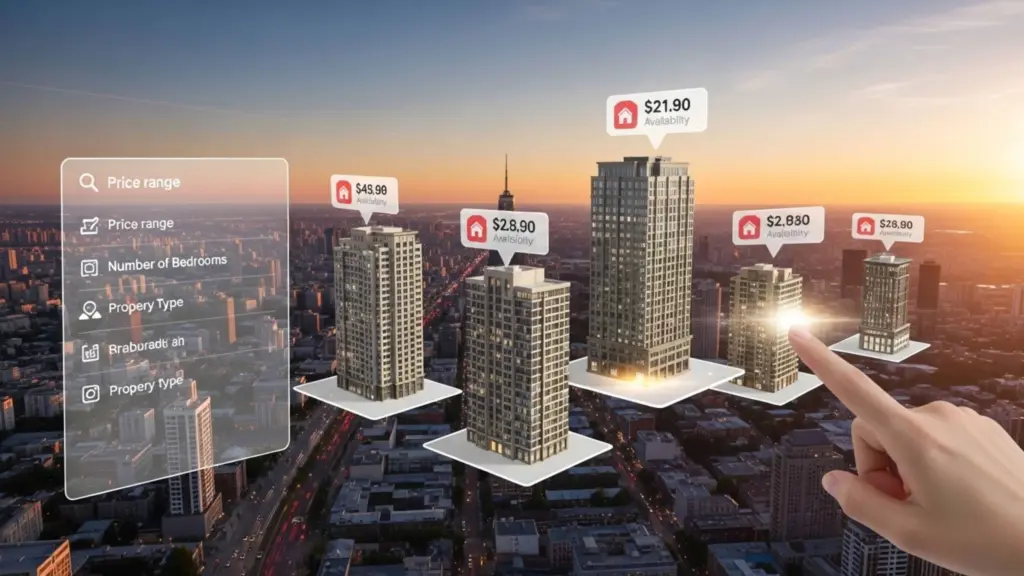
Most buyers think they’re searching on Zillow or a random property website. What they don’t realize is that the technology pulling those listings together has a name. It powers thousands of agent and brokerage websites quietly in the background. That technology is the IDX property search.
Understanding it helps agents make smarter decisions about their digital presence.
What IDX Really Stands For
IDX is short for Internet Data Exchange. It’s the system that links your website to your local MLS database and shows visitors live listings. But it’s not a free-for-all.
Brokers and agents must get the right permissions and follow strict rules about compliance before showing MLS data. Every listing shown on your site operates within an agreement between you, your MLS, and the listing broker.
In simple terms:
- Your MLS holds the listing data
- IDX pulls that data into your website
- Compliance rules govern what you can display and how
- Buyers search listings directly on your platform
That structure keeps the data accurate, protected, and trustworthy for everyone involved.
Why IDX Matters for Agents and Brokerages
Do you know what the big portals will never give you? It’s ownership. When a buyer searches on Zillow, Zillow captures the lead. Zillow owns the relationship. Your listing appears there, but the client inquiry goes to whoever paid for that ad slot.
IDX flips that model completely. Leads captured on your IDX-powered website come directly to you. Your branding stays front and center throughout the entire search experience. The client relationship starts with you and stays with you.
Pairing a strong IDX website with the best real estate CRMs makes that even more powerful. You capture the lead, nurture it automatically, and convert it on your own terms.
How Modern IDX Differs from Old IDX
Early IDX was functional but forgettable. A basic listing grid, a few filter options, and a contact form. That was about it.
Modern IDX looks and feels completely different. The best platforms today are built around real estate app features that buyers actually expect from their everyday apps. Fast loading, intuitive mobile interfaces, smart search filters, and AI-powered property recommendations that learn from user behavior.
Buyers can save searches, get instant alerts, and revisit their favorite listings without losing their progress. The experience feels less like a database and more like a tool built specifically for them.
That shift matters more than most agents realize. When your website delivers an experience that buyers actually enjoy, they stop leaving for the portals. They stay, they engage, and they reach out to you first.
Why Mobile-First IDX Is No Longer Optional
Five years ago, having a mobile-friendly website was considered a nice touch. Today, it’s the price of entry. Buyers aren’t adapting their behavior to fit your website. Your website needs to fit their behavior.
The numbers tell a clear story. More than 60% of online property searches now happen on mobile devices. That figure keeps climbing every year. Buyers browse during commutes, lunch breaks, and late evenings. The search never really stops.
If your IDX property search experience isn’t built for mobile first, you’re not just behind on design. You’re actively losing leads to agents and platforms that have already made this shift.
User Experience Impacts Lead Conversion
Convenience drives everything now. Buyers open their phones the moment a thought crosses their mind. “Let me check if anything new came up.” That impulse search happens on mobile, every single time.
Behavioral trends back this up consistently. Younger buyers especially treat mobile search as their default. They save listings, share properties with partners, and revisit favorites all from one device. A desktop visit often comes later, if at all. Agents who optimize for mobile capture that first critical moment of intent.
A poor mobile experience doesn’t just frustrate buyers. It costs you real business. Here’s where most non-optimized sites lose people:
- Slow load times: buyers abandon pages that take more than 3 seconds to load
- Cluttered layouts: small screens magnify every design mistake
- Hard-to-tap buttons: tiny contact forms kill conversion instantly
- Broken filters: frustrating search tools send buyers straight to the portals
A smooth, fast, intuitive mobile experience keeps buyers engaged longer. More engagement means more saved searches, more return visits, and more direct inquiries coming to you.
Pairing that experience with a solid real estate CRM with MLS integration means every lead that comes through gets captured, tracked, and followed up on automatically. Nothing slips through the cracks.
Competitive Advantage for Agents
Most agent websites still feel like afterthoughts on mobile. That’s actually good news for you.
Buyers who land on a fast, clean, app-like mobile property search experience notice the difference immediately. It builds instant credibility. It signals that you take their experience seriously. And it keeps their attention on your platform instead of sending them back to Zillow.
Standing out from the portals doesn’t always require a bigger budget. Sometimes it just requires building something that actually works on the device your clients use most.
How Mobile IDX Website Helps Agents Generate and Convert More Leads
Portals generate leads every day. But those leads belong to the portal, not to you. When a buyer clicks “contact agent” on Zillow, Zillow decides what happens next. They sell that inquiry. They control the relationship. You might get a notification, or you might not.
Mobile IDX property search flips that dynamic completely. Every lead that comes through your own platform belongs to you. No bidding or competition. No middleman taking the first cut of a relationship you worked to build.
But lead ownership is just the beginning.
Modern mobile platforms track buyer behavior in ways that change how you follow up. You can see which properties a buyer viewed, how many times they returned, and what price ranges they filtered most. That data tells a story. And agents who read it correctly show up to conversations already knowing what their client wants.
Higher engagement time matters too. A fast, intuitive mobile real estate search experience keeps buyers on your site longer. Longer sessions mean more saved searches, more alerts set, and more opportunities for you to respond at exactly the right moment.
Turning Engagement Into Conversion
Alerts are one of the most underused lead-nurturing tools in real estate.
When a buyer sets a saved search on your IDX platform, they’ve told you exactly what they want. Every automated alert you send keeps your brand in their inbox. Every new match reminds them that you’re the agent with the right listings.
That consistent presence builds familiarity. Familiarity builds trust. And when that buyer finally decides they’re ready to move forward, they call the agent whose platform they’ve been using for weeks.
Faster response opportunities matter just as much. Mobile notifications let you see lead activity in real time. A buyer who just viewed the same listing four times in one evening is telling you something. Reach out at that moment and your chances of converting that conversation go up dramatically.
The Business Impact: ROI of Investing in Mobile IDX Technology
Most agents treat their website as a digital business card. A mobile IDX platform is something far more valuable. It’s a lead generation asset that works around the clock, captures buyer intent, and builds your brand without paying a portal for every click.
The ROI shows up in multiple ways.
It doesn’t always appear as an immediate spike in inquiries. Sometimes it shows up as fewer dollars spent on Zillow ads. Sometimes it’s a client who found you organically and stayed loyal for years.
Here’s where the returns actually come from:
- Reduced portal dependence: Every lead your own platform captures is a lead you didn’t have to buy. That saving compounds significantly over months and years of consistent traffic.
- Increased brand authority: Buyers who search on your platform associate quality listings and smooth experiences with your name, not a third-party portal.
- Higher conversions: Engaged buyers who spend time on your site, set alerts, and return repeatedly convert at far higher rates than cold portal leads.
- Long-term client relationships: Buyers who find you through your own platform start the relationship on your terms. That foundation makes retention and referrals far more likely.
- Marketing efficiency: A well-built IDX platform attracts organic search traffic consistently. One investment keeps generating leads without ongoing ad spend behind it.
The agents seeing the strongest returns aren’t just investing in better websites. They’re pairing strong mobile IDX platforms with smarter follow-up systems. Using the best real estate follow-up system alongside your IDX turns captured leads into actual closed deals.
Better tools compound. A strong platform brings the lead in. A strong follow-up system closes it.
Common Mistakes Agents Make with IDX Websites
Having an IDX website and having a good IDX website are two very different things. Many agents check the box by setting one up and never look back. That’s where the problems start.
The most common mistakes aren’t complicated. But they’re expensive.
Buyers are turned off by antiquated platforms with awkward mobile interfaces before they have had a chance to look at a single listing. Promising traffic is instantly converted to bounces due to poor mobile optimization. Customers who simply want a clear, easy search experience are irritated by overly complex interfaces with an excessive number of filters and cluttered layouts.
No follow-up automation is perhaps the costliest mistake of all. A buyer sets a saved search, visits your site three times in a week, and then goes silent. Without automation, that lead disappears. A real estate scheduling app like NOVACRM lets buyers book appointments directly from your platform while automated follow-up sequences keep them engaged between touchpoints.
Ignoring analytics is the final blind spot. Your IDX platform tells you exactly what buyers search for, where they drop off, and which listings attract the most attention. Agents who read that data make smarter decisions. Agents who ignore it keep guessing.
FAQs
IDX lets you display live MLS listings directly on your own website. Without it, you’re sending buyers to Zillow and Realtor.com every time they want to search properties.
That means losing leads, losing visibility, and losing the client relationship before it even starts. Every agent serious about their digital presence needs it.
Buyers searching on their phones make decisions fast. A slow, hard-to-navigate site loses them in seconds. A smooth IDX property search experience keeps them engaged longer, builds trust quicker, and drives more direct inquiries straight to you. Mobile optimization isn’t a design choice anymore. It’s a lead generation strategy.
Yes, and this is where the right tools make all the difference. NovaCRM integrates directly with your IDX platform. It tracks buyer behavior, triggers follow-up sequences, and keeps your pipeline organized in one place. It is a system that works while you focus on closing.
Not necessarily. The bigger investment is choosing the right platform from the start. A well-built mobile IDX website generates organic traffic, captures leads consistently, and reduces what you spend on paid portals over time.
The upfront cost pays for itself quickly when your platform starts working as a 24/7 lead generation tool.