


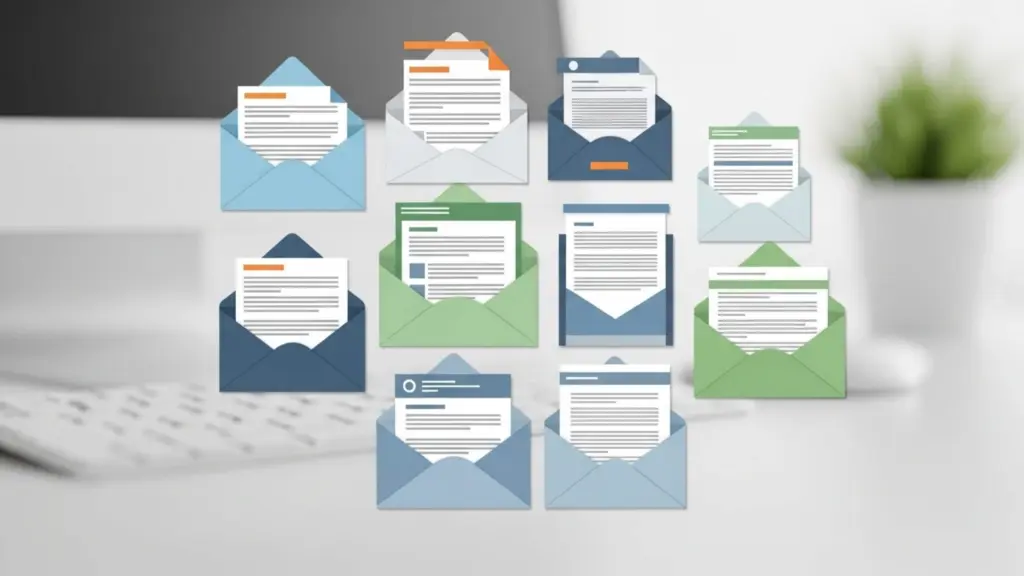
Email is the backbone of real estate communication. Your inbox is where deals begin, trust builds, and relationships grow.
Buyers and sellers expect responses within minutes. They want professionalism with a personal touch. They’re comparing you against three other agents who replied faster.
Yet manually crafting each email drains your day. You type the same information repeatedly. You copy and paste from old messages.
This is why smart agents turn to CRM systems. These platforms store every client detail. They automate your outreach. They give you email templates for real estate agents that actually work. No more staring at blank screens.
The best part? Modern templates aren’t generic anymore. They pull real data from your CRM. Client names. Property preferences. Budget ranges. Neighborhood interests. All dropped into professionally written messages automatically.
Think of it as having a personal assistant who remembers everything about everyone.
We’re going to go over the most important email templates that every real estate agent should have in this guide. From that important first impression to monthly newsletters that keep you in people’s minds. You’ll get templates for every step of the client journey.
Let’s start.
Why Real Estate Agents Should Use CRM Email Templates
Speed wins deals in real estate. When a lead emails you about a property, they’ve already emailed two other agents. The first one to reply with helpful information usually wins the conversation.
Email templates for realtors solve this problem instantly. Here’s what happens when you use CRM email templates:
- You respond faster. No more typing from scratch. Click a template, review it, and send. Your reply goes out in 30 seconds instead of 10 minutes.
- Your messaging stays professional. Every email sounds polished. No typos from rushing. You don’t forget important details. Your brand voice remains consistent across hundreds of messages.
- You nurture leads better. Templates help you follow up on schedule. A viewing reminder goes out automatically. A check-in email arrives exactly one week after a showing. Nothing falls through the cracks.
- Your communication history stays organized. Your CRM tracks every template you send. You know exactly what each customer got and when. No more wondering if you already sent that listing.
- You automate repetitive tasks. You are not going to type in new lead emails. Appointment confirmations. Thank you messages. These happen automatically while you focus on showings.
The real power comes from dynamic real estate templates in CRMs. Your CRM pulls contact details automatically. This includes client names, property preferences, budget ranges and other important details. It has location data. Everything personalizes without you typing a single word.
This connects directly to your broader email marketing for real estate strategy. Templates form the foundation of consistent client communication.
Instead of writing the same message 50 times a month, you click and send. More time for showings and for closings. More time for what actually makes you money.
That’s the template advantage.
Key Elements of High-Performing Real Estate Email Templates
Not all templates work. Some get opened and clicked. Others get deleted instantly. The difference? Structure and personalization. Real estate email templates need certain things to get people to respond. Miss one component and your email feels robotic.
Include them all and clients think you wrote it just for them.
- People will open your email if the subject line is clear. Instead of saying “New properties available,” say something like “3 new listings in Brampton under $500K.”
- Using CRM data to personalize templates makes them feel real. Your system automatically adds names, property types, locations, and budgets to every message.
- Short paragraphs keep readers interested. Put the text into groups of two to three sentences. Most of our clients read their emails on their phones.
- Information that is relevant builds trust quickly. Share market updates or listing details that fit this client’s real search criteria and preferences.
- Strong calls-to-action drive next steps. Tell readers what to do. Schedule a viewing. Reply with questions. Click to see more listings.
The secret is balance. Templates save you time. They shouldn’t feel like templates to your clients.
Your CRM handles the personalization work. It pulls data from contact records. It drops custom details into each field. Bulk emails feel individually written.
Real Estate Agent Introduction Email Template
First impressions happen in the inbox. A new lead fills out your contact form. They browse listings on Zillow. They click “Contact Agent” on a property portal. What happens next decides everything.
Your introduction email sets the tone for the entire relationship. Send it within minutes of receiving the inquiry. Speed shows that you’re serious and ready to go.
When to use this template:
A buyer or seller fills out a form on your website. You get a new lead from Zillow, Realtor.com, or another property portal. Someone asks a question about a specific listing. A referral connects you with a new client.
What to include in your real estate agent introduction email:
Start with a brief introduction. Share your name and brokerage. Keep it to one sentence.
Mention your experience or specialization. Are you a neighborhood expert? Do you focus on first-time buyers? Have you closed 50+ deals? Pick one credibility point.
Offer genuine help with their goals. Reference what they’re looking for. Buying their first home. Selling to downsize. Investing in rental properties.
You should invite them to schedule a call. Make the next step crystal clear and easy.
These email templates for real estate agents work because they’re conversational. You’re not pitching. You’re opening a dialogue.
This is what a real estate agent’s introduction email looks like:
Subject: Re: Your inquiry about [Property Address/Neighborhood]
Hi [First Name],
Thanks for reaching out! Hi, I’m [Your Name] from [Brokerage Name]. I’d love to help you with your [home search/selling plans] in [Location].
I know a lot about [neighborhood/property type/buyer type] and have helped more than [number] families find their dream home in the last [timeframe]. I know this market like the back of my hand.
I just saw that you’re interested in [specific detail from their inquiry]. I have some great choices that might be just what you need, and I can also give you some insider tips on how the market is doing right now.
Would you be open to a quick 15-minute call this week? I can answer your questions and share properties that match your criteria.
Let me know what works for your schedule.
Best,
[Your Name]
[Phone Number]
[Brokerage Name]
It’s simple and personal. Action-oriented. That’s what converts leads into clients.
New Lead Response Email Template
Speed kills the competition. A lead submits their information at 2 PM. By 2:05 PM, they’ve already heard from two other agents.
The first agent to respond wins most of the time.
Your new lead response decides if you get the meeting or get ignored. Every minute counts. Another agent is already typing their reply. This isn’t about being pushy. It’s about showing up when the client actually needs help.
Why this first email matters:
Most leads reach out to multiple agents at once. They’re seeing who answers the quickest and sounds the most helpful. The first answer sets the standard. Everyone else has to catch up.
Here’s what works in new lead emails:
Reply within minutes whenever possible. Turn on phone alerts. Let your CRM send automatic responses when you’re showing properties.
Thank them right away. Mention the specific property or area they asked about. Show you actually read their message.
Ask a few qualifying questions. When do they want to move? Have they talked to a lender yet? What features matter most? Good questions help you help them better.
Make the next step obvious. Offer specific times for a call. Send your calendar link. Suggest a property tour. Don’t leave them wondering what happens next.
Email templates for realtors handle this on autopilot. A new lead comes in. Your CRM fires off a personalized reply instantly. The lead gets acknowledged while you wrap up your current appointment.
Smart agents pair this with real estate appointment scheduling software. Leads click your calendar link and book their own time slot. No texting back and forth about schedules. They pick a time. It syncs to your calendar. You show up ready.
Here’s what the new lead response email template looks like:
Subject: Got your message about [Property/Area]
Hi [First Name],
I just saw your question about [specific property/neighborhood]. Thanks for getting in touch!
I’d be happy to help you [buy/sell] in [area].
Quick question: Are you still looking at your options or are you planning to [move/buy/sell] in the next few months?
I can send you some listings that fit what you’re looking for either way.
I can talk to you quickly [today or tomorrow]. Does [time] or [time] work? Or grab any slot here: [calendar link]
Talk soon!
[Your Name]
[Phone]
[Brokerage]
Load this into your CRM once. Every new lead gets a reply in under a minute. You beat every other agent sitting in their inbox.
Property Showing Follow-Up Email Template
The showing ends. You shake hands. The client drives away. Most agents stop right there. Big mistake.
What happens in the next 24 hours separates top producers from average agents. Your post-meeting email continues the conversation. You value making the right choice over making a deal.
This email is very crucial for you. You get property feedback honestly. What did they love? What felt off? These answers guide your next recommendations.
You identify their true preferences. Maybe they said they wanted a fixer-upper but their face lit up at the move-in-ready home. Actions speak louder than their original checklist. You suggest better alternatives quickly. Their feedback helps you pull listings that actually match what they’re looking for.
Most successful agents use email templates for real estate to stay consistent with follow-ups. After every showing, the same thoughtful message goes out. No buyer wonders if you forgot about them.
Here’s a template that works:
Subject: Thoughts on [Property Address]?
Hi [First Name],
Thanks for touring [Property Address] with me today! I enjoyed showing you around.
What did you think? Did it check the boxes on your list?
I’m curious about a few things. How did the [kitchen/layout/backyard] feel to you? Was the location what you had in mind?
Your honest feedback helps me find properties that truly fit what you’re looking for.
I also found [number] other listings in [neighborhood] that might interest you. A couple have [a feature they mentioned wanting]. Want me to send those over?
Let me know your thoughts when you have a minute.
Best,
[Your Name]
[Phone]
[Brokerage]
Send this within 4 hours of the showing. Strike while the property is still fresh in their mind. Their feedback becomes your roadmap to the perfect home.
New Listing Alert Email Template
New listing alerts keep your buyers informed and engaged. These emails showcase properties the moment they become available. Your buyers see opportunities before the competition floods in. What makes a strong listing alert email:
Include eye-catching property photos. The main exterior shot and 2-3 interior highlights. Buyers decide in seconds if they want to learn more.
Show price and location upfront. No one wants to click through just to find out it’s over budget or in the wrong neighborhood. Highlight key features that matter. Three bedrooms. Updated kitchen. Backyard for their dog. Pool they mentioned wanting. Match the property to their stated preferences.
Make viewing easy. Offer specific showing times. Include your calendar link. Remove friction from the next step.
This is where dynamic CRM email templates shine. Your system tracks what each buyer wants. Budget range and preferred neighborhoods. Must-have features. Number of bedrooms.
When a matching listing appears, your CRM builds the alert automatically. It pulls the property details. Inserts the buyer’s name. References their specific search criteria. Sends the email without you typing a word.
These email templates for realtors work around the clock. A new listing posts at 9 PM. Your buyers get alerts by 9:02 PM. You’re sleeping. Your CRM is working.
Here’s the template structure:
Subject: New listing in [Neighborhood]: [number]bed/[number]bath under $[Price]
Hi [First Name],
Just hit the market! This [property type] in [neighborhood] matches what you’re looking for.
[Property Photo]
[Address]
[Price] | [Bedrooms] bed | [Bathrooms] bath | [Square Footage] sq ft
Here’s why I think you’ll love it:
• [Key feature matching their preference]
• [Another feature they mentioned wanting]
• [Location benefit or nearby amenity]
This one won’t last long in this market. Want to see it this week?
I have showings available [day] at [time] and [time]. Or pick any time here: [calendar link]
Let me know!
[Your Name]
[Phone]
[Brokerage]
Set up your preferences once. Let your CRM handle the alerts. Your buyers stay informed. You stay ahead.
Market Update Email Template
Your past clients aren’t actively house hunting. But they’re still thinking about real estate. Their home’s value. Their neighborhood’s future. Whether now’s the time to invest. Market update emails keep you in their minds when those thoughts surface.
These emails position you as the local expert. You’re not selling anything. You’re sharing valuable insights about their biggest investment. When they’re ready to buy, sell, or refer someone, guess who they call first?
What to include in market updates:
Share local property price trends. Are homes in their neighborhood up 8% this year? Did nearby condos see a price drop? Real numbers build credibility.
Discuss current market demand. Are buyers competing for limited inventory? Is it shifting to a buyer’s market? Help them understand what’s happening.
Highlight investment opportunities. Which neighborhoods are emerging? What areas offer the best value right now?
These emails work as newsletter templates for real estate agents. Send them monthly or quarterly to your entire database. Past clients. Current leads. Future prospects.
A strong email list makes these updates more powerful. Learn strategies for how to build an email list for email marketing that work for real estate professionals.
Here’s a simple template:
Subject: [Month] Market Update: What’s happening in [Area]
Hi [First Name],
Hope you’re doing well! Here’s what’s happening in the [area] real estate market this month.
Market Snapshot:
• Average home prices: $[amount] (up/down [percentage])
• Days on market: [number]
• Inventory levels: [high/low/balanced]
What this means: [One sentence about buying/selling conditions]
Coming to [area]: [One upcoming development or improvement]
Thinking about your home’s value or the market? Let’s chat anytime.
Best,
[Your Name]
Send consistently and build trust. You are going to stay top of mind with your leads.
Real Estate Newsletter Template for Long-Term Client Nurturing
One deal doesn’t end the relationship. It starts it. Your past clients are your best source of future business. They know you and trust you. They talk to friends about buying and selling. The question is whether they remember you when those conversations happen.
Monthly or quarterly newsletters keep you present without being pushy. You’re not asking for business. You’re providing value. Sharing helpful information. Being the real estate resource they can count on.
What to include in your realtor newsletter template:
Feature select listings each month. Not your entire inventory. Pick 2-3 standout properties that spark interest. Beautiful homes. Unique features. Great deals.
You can share available market insights they actually care about. It includes local trends or price movements in their neighborhood. What’s happening with interest rates. Keep it brief and relevant.
Offer practical home maintenance tips. Seasonal checklists. When to service the HVAC. How to prepare for winter. This content helps them protect their investment.
Highlight community updates. You can mention restaurants that are opening nearby. Local events. School news. Park improvements. Show you know and care about the area beyond just property sales.
Newsletters generate referrals naturally. A past client reads your update. Their coworker mentions looking for a house. Your name comes up immediately because you just landed in their inbox last week.
The realtor newsletter template should feel like helpful updates from a friend, not a sales pitch. Provide value consistently. Trust builds over time. Referrals follow naturally.
Best Practices for Using CRM Email Templates Effectively
Templates save time. But bad templates waste opportunities. The difference between a template that converts and one that gets deleted? How you use it. Smart agents treat templates as starting points, not final drafts.
Dynamic CRM email templates work best when you follow proven practices. Small adjustments create big results.
- Personalize beyond the name: Insert property preferences and budget ranges from your CRM. Talk about what they talked about last time. Talk about the property they just saw. Even when it’s automated, make every email feel like it’s for you.
- Break up your audience: Buyers and sellers need different messages. People who are buying for the first time need to learn. Investors want information about ROI. Luxury sellers want to know what’s going on in the market. Make different templates for each group.
- Keep messages scannable: Long paragraphs kill engagement. Break text into short chunks. Use bullet points. Make your call-to-action obvious. Most people read emails on their phones.
- Track and optimize: Monitor which templates get opened and which get ignored. Test different subject lines. Try new call-to-action spots. Your CRM shows what works. Improve your templates monthly.
Automation makes these practices work at scale. Set up sequences that nurture leads for weeks without manual work. Learn how to automate your real estate business and reclaim hours every week.
Templates plus automation equals consistent communication. You stay in touch with hundreds of contacts. Every message feels personal. You focus on closings instead of typing.
Conclusion
Email communication drives real estate success. CRM systems make client management effortless. Templates help you respond fast and stay professional.
Having structured email templates for real estate agents lets you nurture leads consistently. You build trust naturally. Stay organized through every deal stage.
Start building your template library today. Load these proven formats into your CRM. Customize them to match your voice and market.
Ready to streamline your communication and close more deals? NOVACRM gives you powerful email templates, automation, and client management tools built specifically for real estate professionals.
Try NOVACRM free demo and transform how you communicate with clients.