


Imagine someone sees your advertisement, looks at your website, and sends you a message on WhatsApp. Then you do not hear from them anymore. On they might come back and make a purchase, or they might not.
What happened between the time they first looked at your site and the time they decided to buy something? This is the customer journey. The customer journey is the path that people follow from the time they first become interested in something to the time they actually buy it. Customer journey management is what helps people move smoothly from being interested in something to actually buying it, or it can cause them to get confused and give up.
Nowadays, people want things to happen quickly they want things to be relevant to them. They want simple service. Companies that are good at managing the customer journey grow faster and keep their customers for a time.
This guide will explain what customer journey mapping is, and it will show you the common problems that people have, and it will give you practical solutions that you can start using today. The customer journey is a thing to understand, and customer journey management can make a big difference in how well your business does.
What is Customer Journey Mapping, and Why Does it Matter?
Customer journey mapping is a visual roadmap of every step a customer takes with your brand — including emotions, touchpoints, and actions. It turns guesswork into facts so teams can fix real problems and create moments that delight.
User journey mapping vs customer journey mapping (short and clear)
- User journey mapping: focused, short flows (for example, how an admin schedules a listing). Best for product UX decisions.
- Customer journey mapping: broad, end-to-end flows across marketing, sales, and support. Best for strategic CX improvements.
Simplify your daily real estate workflow with our trusted real estate CRM. You can track leads, organize conversations, and improve follow-ups while building better relationships with your clients.
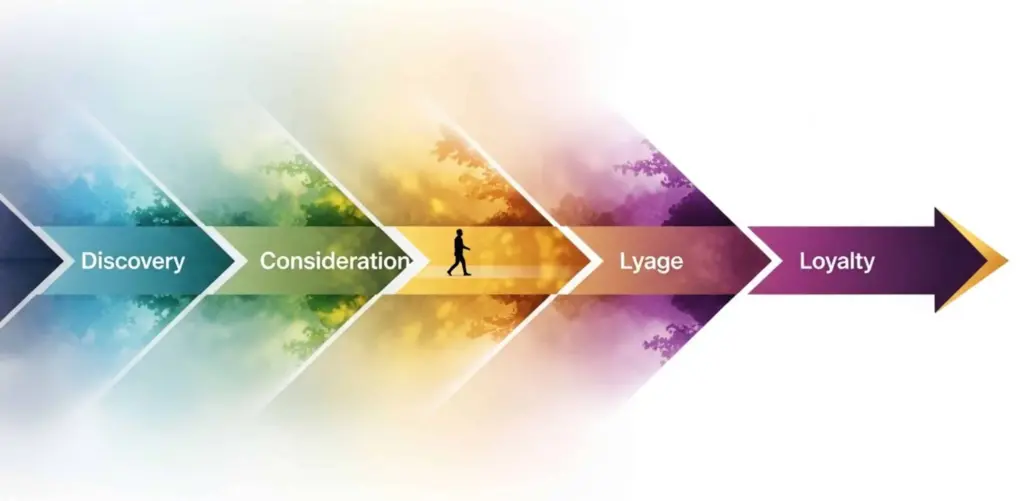
The 5 stages of the Customer Experience Journey
Every effective map tracks five simple stages. Use these to structure your map.
1. Awareness
What happens: A person learns about your brand or faces a problem.
Pain point: Ads may attract clicks, but not the right people.
Solution: Target messages by persona and channel; test headlines and landing pages.
2. Consideration
What happens: They compare options and read reviews.
Pain point: Confusing pricing or slow response to questions.
Solution: Offer clear comparisons, FAQ pages, and fast chat or WhatsApp replies.
3. Decision / Purchase
What happens: They buy, subscribe, or sign a contract.
Pain point: Complex checkout or too many steps.
Solution: Simplify forms, offer multiple payment methods, and use one-click actions.
4. Retention
What happens: They use the product and need support.
Pain point: Poor onboarding or slow support increases churn.
Solution: Proactive onboarding emails, guided tutorials, and accessible support channels.
5. Advocacy
What happens: Happy customers recommend you.
Pain point: No system to capture referrals or testimonials.
Solution: Ask for reviews, run referral programs, and highlight success stories.
Busy real estate professionals use real estate deal tracking software to simplify deal management and improve productivity. It helps agents track transactions and stay updated throughout every stage of the process.
Step-by-Step: How to Create a Customer Journey Map that Drives Action
Follow these steps to produce a map your team will actually use.
1. Build Buyer Personas
Identify who you serve: demographics, goals, typical channels, fears, and buying triggers. One accurate persona beats five vague ones.
2. List all touchpoints
Include ads, organic search, emails, social messages, website pages, phone calls, and in-person interactions. Be exhaustive — missing touchpoints hides churn points.
3. Collect real data
Use analytics, CRM logs, support tickets, and customer interviews. Data shows where people drop off and which pages convert.
4. Map emotions and expectations
At each touchpoint, note whether customers feel curious, confused, frustrated, or delighted. Emotional mapping pinpoints where experience improvements matter most.
5. Identify pain points and opportunities
Find places with high drop-off or repeated support requests. Turn each pain into a specific action with an owner and a deadline.
6. Create and test solutions
Run small experiments: faster replies, simpler forms, or clearer copy. Measure effects and scale the winners.
7. Make it operational
Integrate the map with your tools and workflows. Use your CRM to track follow-ups and set KPIs to monitor improvements.
Want faster leads and better client communication? Discover how AI cold calling real estate tools help agents automate outreach, save valuable time, and connect with more buyers and sellers daily.
Customer Journey Management Tools that Actually Help
Good tools let you visualize and manage journeys without rebuilding workflows.
- UXPressia: professional journey maps and exports.
- Smaply: strong persona and mapping features.
- HubSpot CX: full journey management and analytics.
- Miro: collaborative maps and team workshops.
- Canva: quick, attractive map templates.
Learn how AI call automation in real estate helps agents respond faster to buyers and sellers while reducing manual calling and improving lead follow-up consistency.
What are the Common Customer Pain Points and Practical Fixes
- Pain: Long response times.
- Fix: Set SLA targets and automated triage to route urgent queries first.
- Pain: Multiple people handling the same customer without context.
- Fix: Use a single CRM record and activity timeline for every customer.
- Pain: Confusing pricing or product pages.
- Fix: Run A/B tests, simplify choices, and add a “compare” table.
- Pain: Customers abandon carts.
- Fix: Add clear trust signals, fewer form fields, and a fast checkout with saved details.
- Pain: No measurement of experience.
- Fix: Track NPS, CSAT, and journey-specific conversion rates.
Why Does Customer Journey Mapping Matter?
- 86% of buyers will pay more for a better experience, and experience is a top differentiator for brands (PwC).
- Companies focusing on customer experience see higher retention and growth; McKinsey studies show improved customer journeys lift revenue and lower churn.
- In digital commerce, small improvements in checkout and onboarding can yield double-digit increases in conversion (industry A/B testing benchmarks). For Canadian market specifics, consider regional reports by StatCan or industry surveys linked on local CX blogs.
How to Measure Success — KPIs that Matter
Track simple, action-driven KPIs tied to your map:
- Conversion rate per stage (awareness → consideration, consideration → purchase)
- Time to first value (how long until customers see the benefit)
- Customer Effort Score (how easy was the interaction)
- CSAT and NPS for loyalty and satisfaction
- Churn rate and retention over 30/90/365 days
Improve client communication with effective real estate lead follow-up email strategies. Smart follow-up emails help agents stay connected with buyers and sellers. They also improve replies, build trust, and increase conversion opportunities online.
A Practical Example of User Journey Mapping
If a real estate agent notices that online leads often stop after initial contact:
- Map the journey for “seller persona.”
- Find touchpoints: ad click → listing page → contact form → calendar booking → call.
- Data shows many drop at the contact form.
- Solution: replace the form with a one-click calendar booking, plus an automated confirmation email. Measure booking rate and follow-up conversion to validate.
Real-World Tips You Can Apply Tomorrow
- Run a 2-hour journey mapping workshop with sales, marketing, and support.
- Pick one “hero” persona and map only their path.
- Turn the top 3 pain points into experiments with clear owners.
- Connect your map to CRM workflows and automation so fixes are automatic, not manual.
Conclusion
Customer journey mapping and customer journey management are not one-time projects. They’re an ongoing process that transforms random touchpoints into consistent, meaningful experiences.
Start with one persona, collect real data, fix the biggest pain points, and measure results. Small improvements compound quickly: better onboarding reduces churn, faster replies increase conversions, and clearer messaging raises average order value.