


The real estate game has changed. Buyers don’t trust generic “we cover the entire city” messaging anymore. They want someone who knows their street, their school district, their coffee shop. Someone who lives and breathes their neighborhood.
Why “Local” Beats “National” in Modern Real Estate
Think about how you search for a plumber or a restaurant. You type “near me” or your neighborhood name, right? Your buyers do the same thing.
46% of all Google searches have local intent. When someone types “homes for sale,” they’re really thinking “homes for sale in MY neighborhood.” Google knows this. That’s why Google Maps now dominates property searches. A listing on Zillow matters less than your visibility when someone searches “Brampton realtor” or “Lakeview Village homes.”
Generic marketing is dying because it screams, “I don’t actually know your area.” You’ve seen those agents who claim to serve 15 different neighborhoods. Buyers see through it instantly. They want the agent who can tell them which street floods during heavy rain or which block has the best Halloween decorations.
Trust isn’t built through polished billboards downtown. It’s built when you show up at the farmers’ market every Saturday. When you sponsor the Little League team. When you know the neighborhood inside out.
This guide will teach you the exact systems to own your neighborhood through hyperlocal real estate marketing. We’re talking lead generation tactics, content strategies, and community domination moves that make you THE name everyone thinks of when they’re ready to buy or sell.
What Is Hyperlocal Real Estate Marketing and Why It Works
Hyperlocal real estate marketing means owning one specific neighborhood instead of trying to be everywhere. You become the go-to expert for a three-mile radius, not a 30-mile market. You know the streets, the people, the pulse of that area better than anyone else.
This isn’t just smart positioning. It’s a completely different business model that transforms how buyers and sellers find you, trust you, and choose you over every other agent in town.
The Shift From City-Level to Street-Level Targeting
Let’s get real about competition. If you’re trying to rank for “Toronto real estate,” you’re fighting against 50,000 other agents and every major brokerage with million-dollar marketing budgets. You’ll lose that fight.
But “Liberty Village condos”? Now you’re talking to a specific audience with specific needs. Maybe 200 agents touch that market, and only 10 are doing it seriously. The game just became winnable.
Smaller geography means lower competition and higher intent traffic. Someone searching for your exact neighborhood isn’t browsing. They’re buying. They’ve already decided on the location. They just need the right agent to guide them.
Psychology of the “Neighborhood Expert”
Your brain trusts specialists over generalists. It’s called authority bias. When someone says, “I’m the top agent in the entire metro area,” you shrug. When they say, “I’ve sold 47 homes on your street in the last three years,” you pay attention.
Familiarity increases trust faster than anything else in real estate. When buyers see your face at the local coffee shop, your lawn sign on their block, and your name on the community newsletter, you’re not a stranger anymore. You’re part of their world.
This is where local SEO for realtors comes in handy. You’re not just making things better for search engines. You’re gaining real micro-market knowledge that sets you apart from the rest. You know:
- Which homes have foundation issues from the 1985 construction boom
- What the new zoning changes mean for property values
- Which streets have the shortest average days on market
- Where the school boundary lines actually fall
Generic agents can’t compete with this level of detail. They don’t have it.
Why Conversion Rates Are Higher With Hyperlocal Leads
Intent-driven search changes everything about your conversion rates. When someone finds you through “Mississauga homes,” they’re not comparing you to 50 agents. They’re thinking, “finally, someone who actually knows this area.”
Less comparison shopping happens because you’ve already differentiated yourself. You’re not another face in a sea of agent headshots. You’re THE Riverside expert. The choice becomes obvious.
The emotional connection is stronger, too. Buyers aren’t just purchasing property. They’re joining a community. When you can speak to that community authentically, when you share stories about the neighborhood’s character and future, you’re selling a lifestyle, not just square footage.
Hyperlocal isn’t about limiting your business. It’s about dominating a market so completely that referrals and reputation carry you beyond that geography naturally. But domination comes first. Pick your neighborhood. Own it. Then expand from a position of strength.
Building Your Hyperlocal Digital Foundation
Your digital presence either positions you as the neighborhood expert or makes you invisible. There’s no middle ground anymore.
Most agents have a website. Few have one that actually works for local search. The difference isn’t design or budget. Its structure and strategy.
Let’s lay the groundwork that will get Google to send hyperlocal leads straight to you.
Google Business Profile: The Engine That Makes You Visible in Your Area
In real estate marketing, your Google Business Profile is the most underused tool. When someone types “realtor near me” or “homes for sale in Westwood” into Google, it picks who shows up based on how strong your profile is.
Complete optimization isn’t optional. Fill out every field. Choose the right primary category. Real Estate Agent, not Real Estate Agency. Add secondary categories like Real Estate Consultant. Define your service areas with precision. Don’t just say “Greater Austin.” List each neighborhood you serve.
Post weekly updates. Market reports. New listings. Sold properties. Open house dates. Google rewards active profiles with better visibility. Businesses with complete Google Business Profiles are 2.7x more likely to be considered reputable by potential clients.
Your review game needs a system. Ask every closing client. Make it easy with a direct link. Respond to every review within 24 hours. The agents with 50+ five-star reviews dominate local search.
On-Page Local Optimization
This is where local SEO for realtors separates serious agents from everyone else. Your website needs to scream “local expert” to both visitors and search engines. You can start with the basics:
- Your Name, Address, and Phone number must match exactly everywhere
- Same formatting on your website, Google profile, and every directory
- Google checks this stuff, so get it right
- One wrong digit kills your local rankings
Schema markup sounds technical. It’s not. It’s just code that tells Google what your content means. Location schema. Real estate agent schema. Review schema. You’re giving Google clear information instead of making it guess.
Embed a Google Map on your contact page. Do the same on neighborhood pages. It reinforces your local presence. Simple move. Big impact.
Include location keywords in your page titles and descriptions. “Kensington Real Estate Agent” beats “Experienced Professional” every time. Be specific about where you work.
Landing Pages for Each Neighbourhood
Make a page for each neighbourhood you work in. Not a standard template. Real content that shows you know what you’re talking about.
Include local schools with ratings. Parents obsess over school districts. Give them what they’re hunting for. List popular parks and restaurants. Add recent sales data for that area. Embed photos that capture the neighborhood’s character.
Internal linking between these pages builds authority. Link your Riverside page to adjacent neighborhood pages. Google sees the connection. It understands your geographic expertise.
Start with your top three neighborhoods. The ones where you’ve closed deals or have strong connections. Get those pages live this week. Perfect them later. You can add more neighborhoods next month. But you need something live now. Not a perfect site six months from now that nobody sees.
Content Strategies That Help You Dominate One Neighborhood at a Time
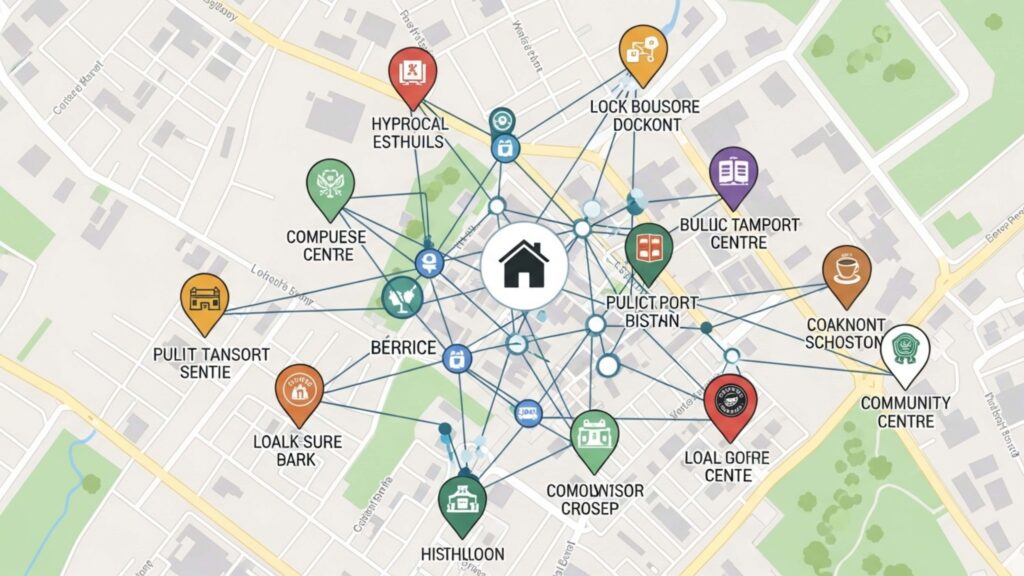
Content isn’t about posting more. It’s about posting smarter. You’re not trying to reach everyone in the city. You’re building trust with one specific community that will remember your name when they’re ready to move.
- Market Snapshot Reports: Send a monthly email breaking down what’s actually happening in your neighborhood. Price trends from last month. Inventory changes. Days on market. The stuff people can’t find on Zillow. I’ve seen agents build entire businesses off this one piece of content because it positions them as the data source everyone trusts.
- Community-Focused Content: Spotlight the local coffee shop that just opened. Write a school district guide that parents bookmark and share. Cover neighborhood events with photos and stories. This is lifestyle content that has nothing to do with selling homes and everything to do with proving you live and breathe this area.
- Video Walk-throughs: Film “What $900k buys you in Riverside” comparison videos. Show three different properties at the same price point. People will watch these all day. Post them on Instagram Reels, YouTube Shorts, and your Google Business Profile. Geotag every single video with the exact neighborhood location.
- Local Partnership Content: Interview the popular restaurant owner. Feature the beloved local teacher. Share the story of the family bakery that’s been there 30 years. This content gets shared within the community and introduces you to people who’ve never heard your name before.
Your content calendar shouldn’t stress you out. Tools for automated social media posting for real estate let you batch-create content once and distribute it across platforms without living on your phone. The goal is consistency, not perfection.
Why Video Wins the Local Game
Video isn’t just another content format. It’s the format that builds trust fastest. Someone can watch you talk about their neighborhood for 60 seconds and decide if you’re genuine or just another agent reading from a script.
85% of video marketers say video has helped them generate leads. But here’s what matters more for hyperlocal strategy: video increases your visibility on every platform simultaneously. Instagram pushes Reels hard. YouTube Shorts get massive reach. Google loves video content in search results.
Your video strategy doesn’t need fancy equipment. Your phone works fine. What matters is consistency and location specificity. Film at recognizable spots in your neighborhood. The park where everyone takes their kids. The corner where the farmers market sets up. The view from the hill that overlooks the whole area.
Geotag everything. When you post a video filmed at Riverside Park, tag that exact location. Instagram shows your content to people who’ve been there or searched for that area. It’s free hyperlocal targeting.
Content That Converts Browsers Into Leads
Every piece of content should serve a purpose. Market reports position you as the data expert. Community spotlights prove you’re connected. Video builds trust and personality. School guides capture the parent demographic.
But here’s the shift most agents miss: you’re not creating content to go viral. You’re creating content that makes 5,000 people in your target neighborhood see your face and name so often that you become the obvious choice when they need an agent.
Think about it differently. Would you rather have 100,000 followers across the country or 5,000 followers in the three-mile radius where you actually do business? The second option pays your bills. The first just feeds your ego.
Pick three content types from this list. Do them consistently for 90 days. Track which ones generate actual conversations and leads. Double down on what works. Drop what doesn’t. Simple.
Local SEO for Realtors: Ranking in Google Maps and Organic Search
Google uses three main signals to decide which agents show up when someone searches for help in their neighborhood. Understanding local SEO for realtors means mastering these three pillars. Miss one and you’re invisible. Nail all three and you own the map pack.
- Proximity
- Relevance
- Prominence
Proximity is straightforward. Google prioritizes agents physically closest to the searcher. You can’t fake this. If someone searches in Leslieville and your office is in Etobicoke, you’re starting behind.
Relevance measures how well your profile and website match what someone’s searching for. Your categories need to be accurate. Your business description should include neighborhood names.
Prominence is about authority. How many reviews do you have? How many websites link to you? Big brands win here by default. Small agents win by dominating one neighborhood so thoroughly that local prominence beats citywide mediocrity.
How Reviews Boost Your Local Rankings
Quantity matters, but keywords inside reviews matter more. When clients naturally mention “Kensington” or “sold our home fast” in their reviews, Google indexes those terms and associates them with your profile.
Ask better questions to get better reviews. Instead of “can you leave a review,” try “could you mention which neighborhood we helped you in?” Guide without being pushy.
- Get 2-3 new reviews every month minimum
- Respond to every review within 48 hours
- Use the reviewer’s neighborhood name in your response
- Thank them for trusting you with their [specific area] home
Tools like a real estate CRM with IDX help you automate follow-ups with past clients. NOVACRM helps you automate follow-ups effectively. You can set reminders to request reviews 30 days after closing. Most agents forget this step. The ones who systematize it build review profiles that crush their competition.
Backlinks with geographic relevance are also very important. One link from your neighborhood blog is worth more than ten links from random websites. Google values geographic relevance in your link profile. These hyperlocal links tell Google you’re genuinely embedded in the area, not just another agent casting a wide net with local SEO for realtors tactics.
Automation and Systems to Scale Your Hyperlocal Presence Without Burning Out
You can’t manually post content seven days a week and still sell houses. It’s not sustainable.
The agents who dominate their neighbourhoods aren’t working harder. They’ve built systems that run while they’re showing properties or closing deals.
Consistency beats perfection in hyperlocal real estate marketing. But consistency requires automation. Systems that handle boring tasks let you focus on closing deals with the right people.
Google values consistency over virality. An agent who posts twice a week for a year will rank higher than one who posts daily for a month and stops. Heere are some automation tips for you:
- Auto-post listings: Real estate CRMs can sync your new listings directly to your Google Business Profile. They can help you stay active across social media platforms, including Instagram, Facebook, and TikTok. No manual uploads. Your profile stays active. Google sees regular updates.
- Social media scheduling: Batch-create content once a week. Film three neighbourhood videos on Monday. Schedule them across platforms. You look consistent. You get your time back.
- Review requests: NOVACRM can help you send automated review requests 30 days after closing. Include a direct link to your Google profile. One setup generates reviews for years.
- CRM follow-ups: Birthday messages. Home anniversary notes. Market updates for their neighbourhood. These touches take five minutes to set up and run forever.
Start small this week. Get your marketing and communication automated with a tool like NOVACRM. Add review automation next month. Layer in social scheduling after that.
Six months from now, you’ll have a marketing machine that runs whether you’re working or not. Your competitors will burn out trying to keep up manually. You’ll keep growing while focusing on connecting with people and closing deals.